
Taming Dependency Chaos
Turning Friction into Flow

No matter your planning frequency, few things cause more heartburn than cross team dependencies. For teams doing Annual Planning, you’re likely in the thick of that heartburn right now. Here’s some thoughts to make it a bit less painful, along with some tips for how AI can help.
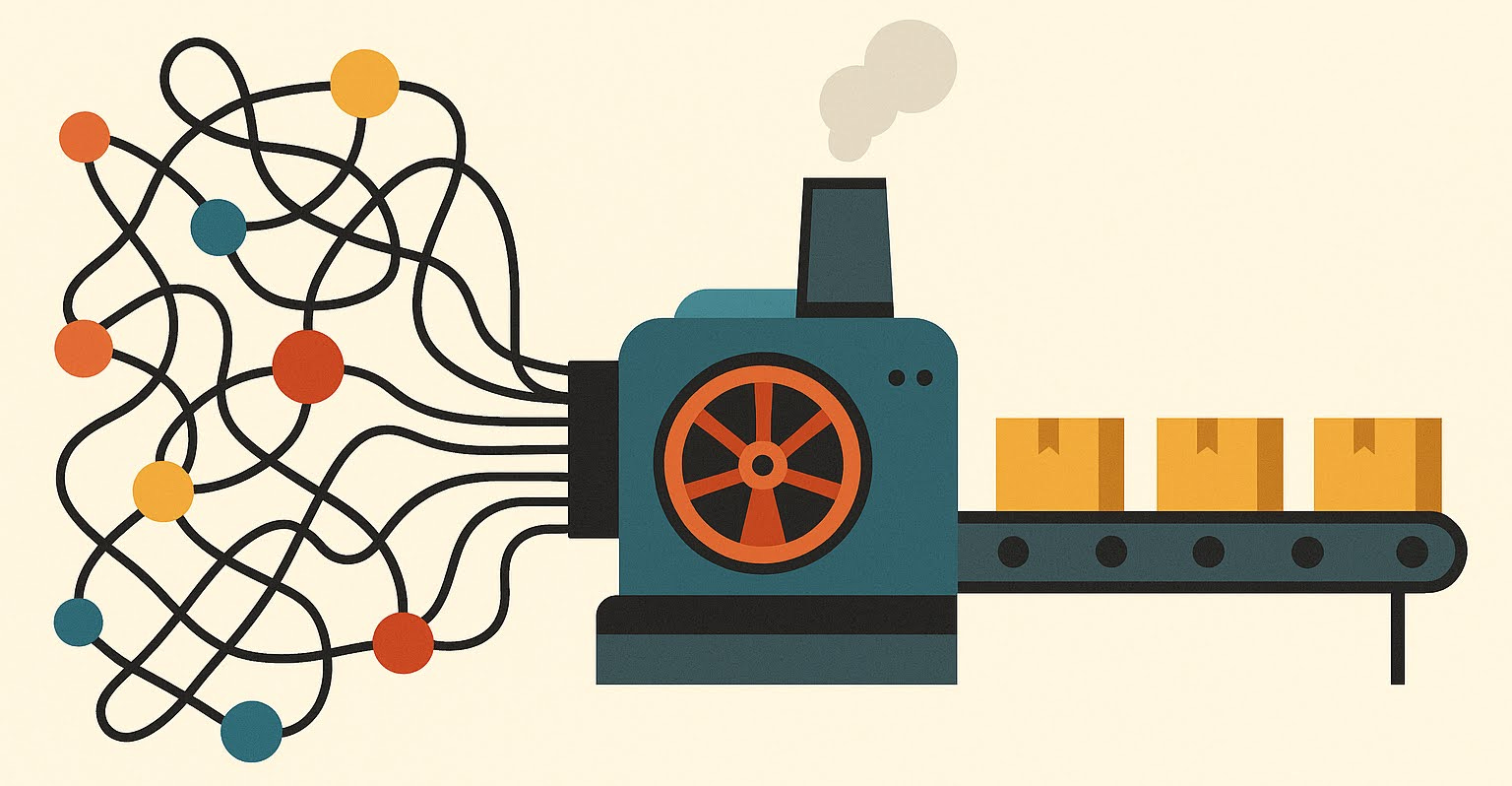
Why do we plan?
The aim isn’t to eliminate dependencies. We plan to make them visible, intentional, and well-sequenced so teams stay aligned and unblocked. Dependencies aren’t a symptom of dysfunction; they’re a sign that teams are connected and scaling. Great cross-team planning feels less like negotiation and more like choreography.
Healthy planning doesn’t happen just once a year, it is a continuous investment. When teams plan together, build in sequence, and keep the loops tight, dependencies stop being friction and start creating forward motion. They become the connective tissue that turns a collection of products into a coordinated ecosystem of value for customers.
Planning is a perfect place to implement AI in your organization. AI tools can act as the stewards of the planning process. They can pull together inputs from multiple teams, surface overlaps, and flag potential risks that might not be visible across silos. Summaries of planning docs, meeting notes, and project trackers can make it easier to see the dependencies and shared priorities in one place.
1. You have to talk to each other. A lot.
Consistent communication is the single biggest differentiator between smooth delivery and painful rework.
Strong communication is what keeps dependencies healthy. The fastest way to lose momentum is through silence or assumptions once execution starts.
Hold regular, short cross-team check-ins, not just for status, but to show work in progress and surface issues early. Track dependency health alongside delivery status: met, at risk, or blocked. When something starts to slip, talk early and course-correct quickly, together. Continuous communication closes the gaps and keeps teams connected.
Dependencies don’t break because of complexity, they break because of distance, absence of shared understanding, and misaligned goals.
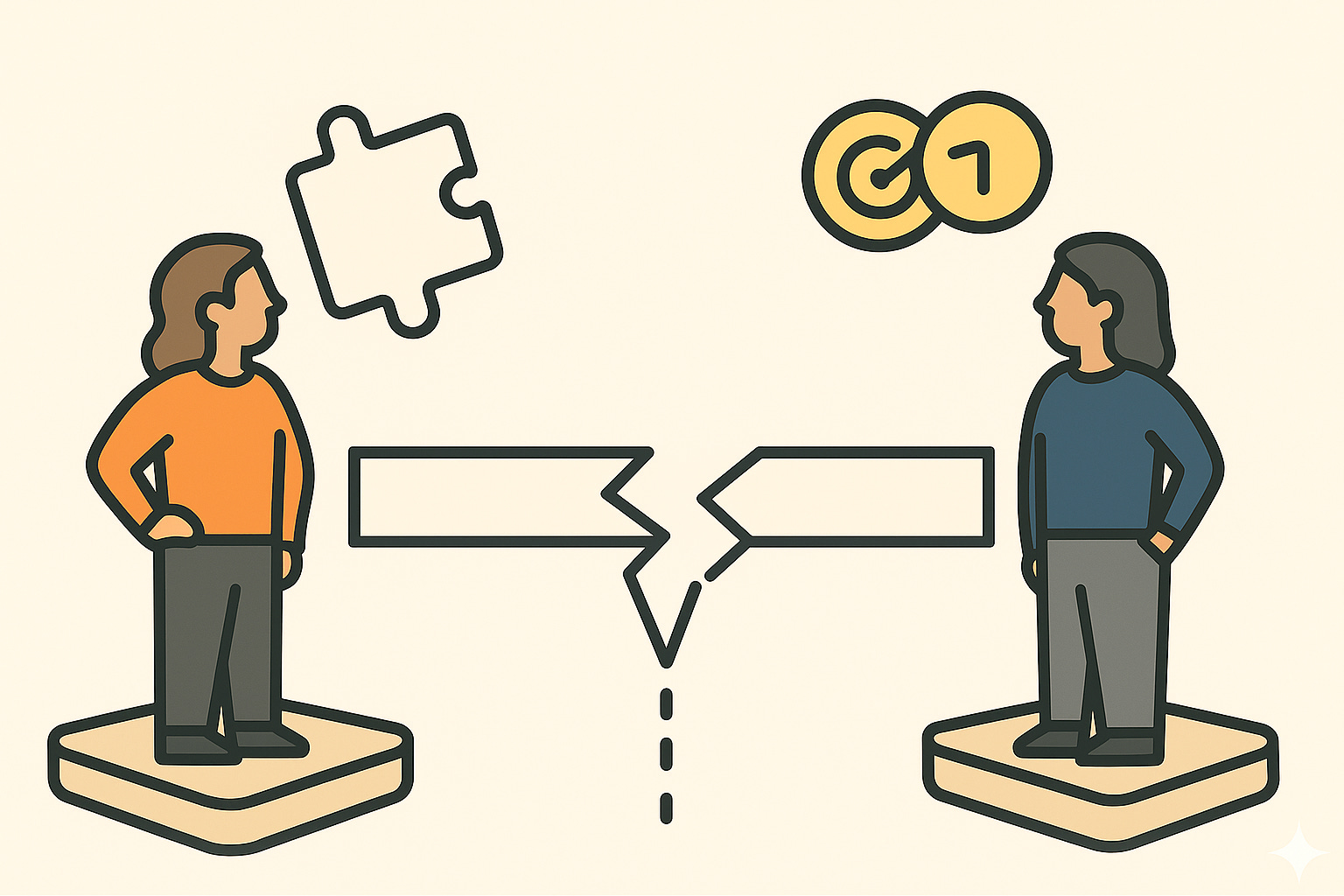
AI can help teams communicate more efficiently by summarizing updates, identifying recurring themes, or flagging risk signals in notes or chat channels. Tools that aggregate written updates across teams can make it easier to spot when two groups are diverging or repeating the same work. A quick AI-generated summary before a meeting helps everyone walk in aligned and ready to go.
2. Welcome and celebrate continued dependency awareness.
When dependencies surface late, or are hidden, they cost time. When they surface early, and are discussed often, they create clarity and opportunity.
Dependencies are necessary design choices which enable platform leverage and holistic experiences, not nuisances. The earlier we surface them, the better our sequencing and capacity planning will be.
During discovery, identify upstream and downstream teams, integration points, and timing constraints. Allow teams to plan around them instead of being surprised by them. Reward teams for surfacing dependencies as soon as they are known as it’s a sign of maturity, not messiness. Check and recheck sequencing and test assumptions for blocking dependencies.
Share early architecture drafts early and be clear and aligned on what “ready” actually means for each dependency.
AI can scan plans, PRDs, and documents to identify overlapping systems, shared APIs, or duplicated problem statements. It can highlight teams that may be working toward similar goals and help you catch unspoken dependencies earlier. Over time, it can learn to surface patterns that indicate when two efforts are likely to intersect.
3. Define and respect platform leverage.
Prioritize for impact, not noise. Build where the multiplier effect is highest.
Platform bandwidth is finite, so not everything can go first. The goal is to invest effort where it creates the most leverage across the organization.
It is almost certain the trade-offs will not be complimentary or clear. Three basic filters will help triage:
Strategic alignment: Does this enable a key customer or company priority?
Readiness: Are the product inputs and requirements clear enough to build well?
Leverage: Will this unlock multiple teams or deliver reusable value?
High-clarity, high-leverage work leads. Lower-readiness efforts can stay in discovery until product signals mature. Communicate your calculus broadly so everyone understands sequencing decisions.
Transparency of your status and decisions turns disappointment into understanding.
AI can help quantify impact by mapping dependencies to outcomes. It can model different sequencing scenarios to show how one platform investment could unlock value across multiple products. AI can also cluster related product needs, helping platform teams see where one solution could serve several teams at once.
4. Sequence to drive outcomes.
Sequencing isn’t about strict order, it’s about achieving outcomes. Outcomes beat rigidity every time.
Think in producer–consumer terms:
Platform (producer) delivers minimal viable contracts early: APIs, schemas, or integration points.
Product (consumer) starts integrating as soon as those pieces exist, giving feedback in short loops.
Both sides stay in sync, adjusting as the work evolves.
Platform teams should make sequencing visible to show who’s up next and where dependencies land. The key is not to build too far ahead or in isolation. Stay close through regular syncs or shared sprint reviews so platform design stays grounded in real product needs. Impact requires outcomes that are lofty, clear, and shared across platform and product teams.
When sequencing supports outcomes, adjustments happen naturally and shifts are spotted sooner.
AI can visualize sequencing dynamically. Instead of static roadmaps, AI can generate live dependency maps from project data, showing what’s moving, what’s blocked, and what’s at risk. It can simulate how a change in one initiative ripples through others and suggest adjustments to keep flow and momentum.
5. Codify durable commitments.
If everyone’s version of truth lives in their head, you don’t have alignment, you have a guessing game.
Dependencies fall apart when they live only in people’s heads. Write them down and make them visible. This includes honesty when a dependency can not be or will not be delivered.
Each PRD or initiative tracker should have a dependency section which logs owners, timing, and risks. Everyone, all disciplines, all teams, play a critical role in reviewing these during planning to make sure nothing’s missing.
Host quick dependency review sessions before finalizing scope. These conversations surface conflicts, clarify ownership, and turn assumptions into agreements.
Write it down. Share it widely. Be honest. Clarity is a form of respect.
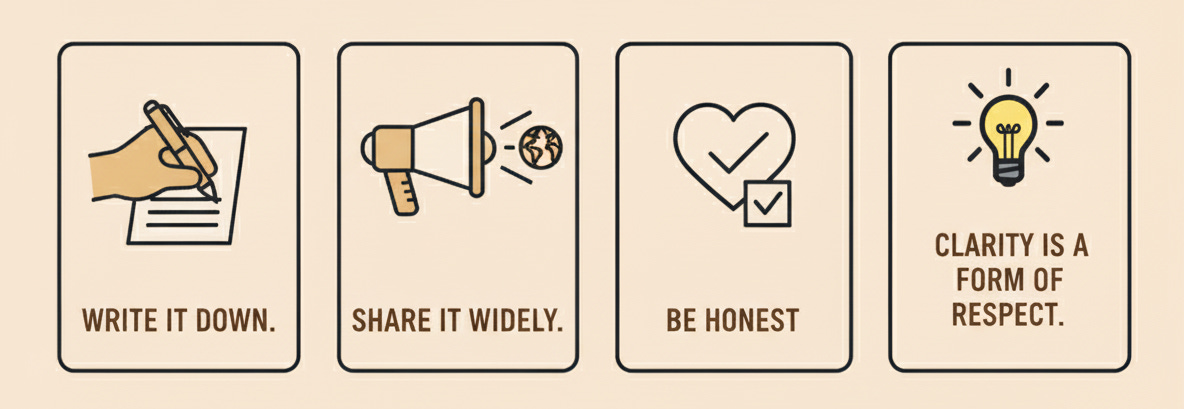
AI can help maintain a single source of truth by automatically syncing notes, documents, and tickets. It can detect when details drift between versions and flag inconsistencies for review. It can also summarize multi-team discussions into concise agreements, ensuring commitments stay clear and current.
6. Milestones are required, and not uniform.
Milestones may be a launch or they may be a point to pause, sync, and make sure the plan still fits reality.
Milestones are key to accountability and shared awareness. Unlike a deadline, which just builds pressure, milestones are defined by measurable progress or impact, preferably with broad alignment on the business outcome.
With dependencies defined, shared milestones can be defined across platform and product teams. Near term milestones are expected to be very clear and long term milestones more ambiguous and open to evolution as learnings come to light. Deliverable dates should also be more concrete in the short term, and more ambiguous in the long term. Milestone definitions create rhythm, not rigidity.
Use milestones as checkpoints to coordinate:
When foundational components will be available
When integration or testing should start
When adoption or validation will be measured
Milestones, and the ceremonies that measure them, are your best defense against misalignment, scope creep, and sunk cost. They’re how we pause, learn, and reorient toward what matters.
AI can track milestone health automatically, pulling from existing tools like Jira or Asana to summarize where things stand. It can create digestible milestone briefs that show what’s ahead, what’s behind, and what’s drifting. Instead of manually building reports, teams can ask simple questions like “What’s at risk this quarter?” and get clear, actionable answers.
7. Not everyone will be happy.
Resources and time are finite. High impact trade-off decisions will almost always result in someone being unhappy.
The healthiest organizations recognize that resources and time are constrained. For every team, in every company, the most important decision is where they spend their time. Our goal is to maximize our impact, with customer value and business outcomes leading our calculus. Do not seek consensus or stakeholder happiness.
Approach dependencies with curiosity. Seek to understand - the motivation and customer struggle behind the request, the priorities of the team, the business and customer value, the complexity of the work - anything that supports an informed opinion.
In most situations, saying no is exponentially more impactful than saying yes. You can’t make everyone happy, you’re not pizza.
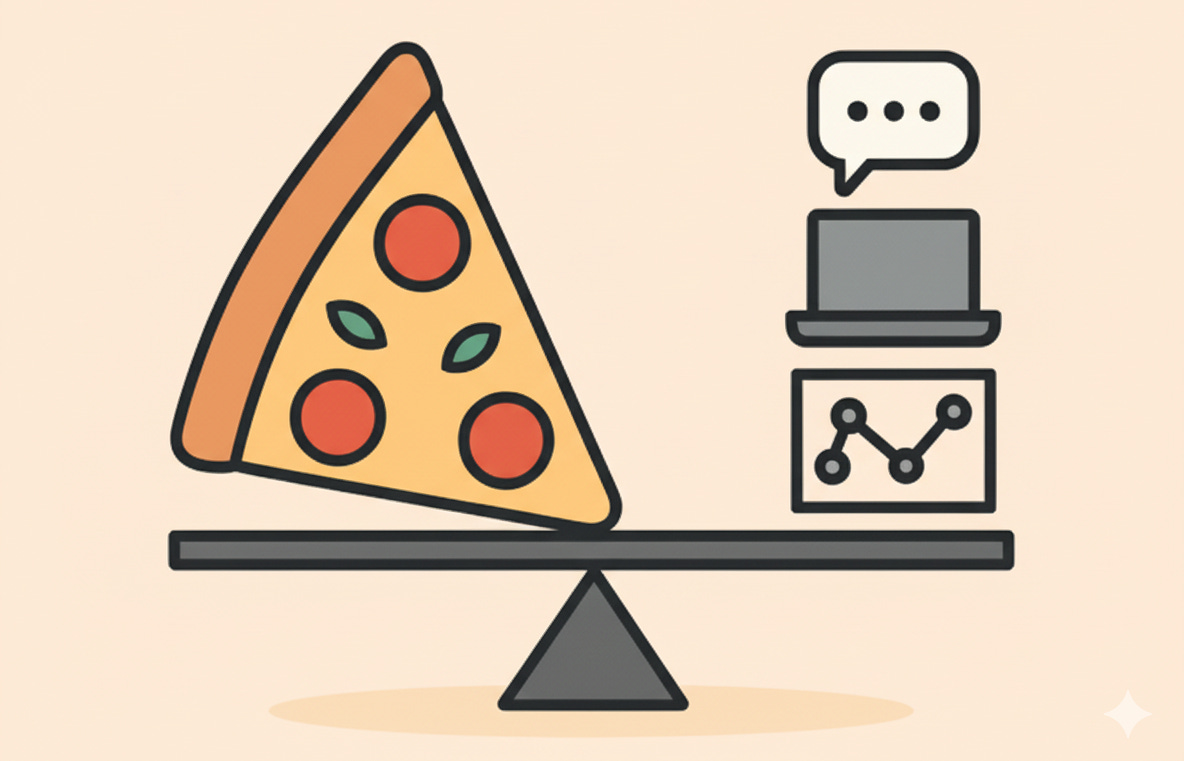
AI can make trade-offs more objective by visualizing impact versus effort across initiatives. It can compare different prioritization scenarios and summarize how each choice affects timelines, customer outcomes, or team load. It won’t make everyone happy, but it helps make the rationale clear and fair.
In Summary
Good planning is less about predicting the future and more about staying connected as it unfolds. There are also a lot of dragons hiding in details in this advice. I’ll share more thoughts on those soon and happy to field questions in the meantime. Please reach out if I can help!
This is a great article, thank you for sharing. Excited to hear more leadership lessons and learnings.